Snowball Earth might have had a dynamic climate and open ...
Sediments from Scotland hint that ocean-atmosphere interactions continued more than 600 million years ago despite widespread ice.
What’s Happening
Okay so Sediments from Scotland hint that ocean-atmosphere interactions continued more than 600 million years ago despite widespread ice.
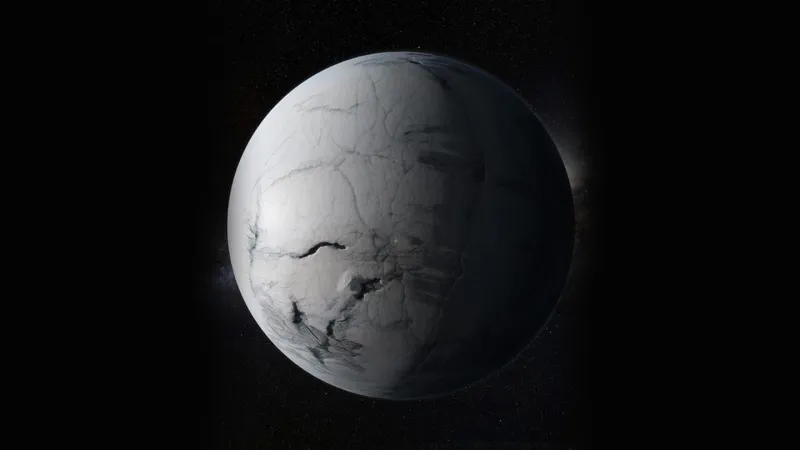
News Climate Snowball Earth might have had a dynamic climate and open seas Rocks from a global ice age over 600 million years ago show records of an active climate Our planet’s average temperature plummeted between 717 and 658 million years ago, causing a worldwide ice age dubbed Snowball Earth (illustrated). Pablo Carlos Budassi By Michael Marshall 1 hour ago this: via email (Opens in new window) Email on Facebook (Opens in new window) Facebook on Reddit (Opens in new window) Reddit on X (Opens in new window) X Print (Opens in new window) Print Over 600 million years ago, most of Earth completely froze over, becoming “Snowball Earth. (and honestly, same)
” But even during this frigid period, the climate still behaved in familiar ways , earth scientist Chloe Griffin and colleagues report in the April 1 Earth and Planetary Science Letters .
The Details
There even seems to have been a tropical climate cycle, like modern El Niños and La Niñas. “Everyone thought that the climate system would be fr quite stable because of global ice coverage,” says Griffin, of the University of Southampton in England.
Instead, she and her colleagues found evidence of an active climate and a partially open ocean. For our We summarize the week’s scientific breakthroughs every Thursday.
Why This Matters
Earth experienced its first freezing spell about 2. Then, during the Cryogenian period about 720 to 635 million years ago , there were two Snowball Earth epochs . The first, the Sturtian glaciation, lasted from about 717 to 658 million years ago.
This could have implications for future research in this area.
Key Takeaways
- Griffin and her team studied Sturtian rocks from the Garvellach Islands, off the west coast of Scotland.
- The rocks contain beautifully preserved stacks of thin layers, alternating between coarse and fine sediments.
- This is unusual for rocks from the Cryogenian: Most are badly eroded and jumbled because glaciers tore them up.
- Today, such layers are found under glacial lakes.
The Bottom Line
Today, such layers are found under glacial lakes. Each summer, coarse sediments are carried into the lake .
Are you here for this or nah?
Daily briefing
Get the next useful briefing
If this story was worth your time, the next one should be too. Get the daily briefing in one clean email.
Reader reaction