Pterosaurs & Plesiosaurs Aren't Dinosaurs? Get The Facts
Forget what you learned in grade school! Pterosaurs and plesiosaurs? Not dinosaurs. But one surprise creature actually is. Dive in.
What’s Happening
For decades, popular culture has lumped almost every large, ancient reptile under the ‘dinosaur’ umbrella. From flying beasts to marine monsters, they all seemed to belong to one big, scary family.
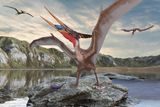
But prepare for a major update to your prehistoric knowledge. Let’s get straight to it: Pterosaurs, those incredible winged reptiles often misidentified as ‘flying dinosaurs,’ are definitively not dinosaurs.
They were distinct flying reptiles that evolved alongside dinosaurs, occupying the skies in their own unique evolutionary branch. The same goes for plesiosaurs, the long-necked marine reptiles frequently depicted as sea monsters.
While these aquatic predators certainly lived during the Mesozoic Era, they were marine reptiles, fundamentally separate from their terrestrial dinosaur cousins. Here’s the kicker: while we’re kicking some out of the club, there’s one animal we previously dismissed that actually is a dinosaur.
This revelation challenges long-standing classifications and proves that even experts are always learning and refining their understanding.
Why This Matters
Why does this distinction matter beyond a fun fact for trivia night? It’s crucial for understanding the true evolutionary history of life on Earth. Clear classification helps scientists accurately trace lineages and understand how different groups adapted and diversified over millions of years.
Mislabeling these creatures blurs the lines between distinct evolutionary branches. Dinosaurs are defined by specific anatomical features, particularly relating to their hips and limbs, which allowed for an upright, bipedal or quadrupedal stance.
Pterosaurs and plesiosaurs simply don’t share these defining characteristics. This isn’t just academic nitpicking; it informs how we interpret fossil records and reconstruct ancient ecosystems.
An accurate understanding prevents us from making incorrect assumptions about their biology, behavior, and relationships within the broader web of life. For the public, it means a more accurate and nuanced appreciation of the Mesozoic Era.
It teaches us that ‘dinosaur’ isn’t a catch-all term for any large reptile from prehistory, but a specific, fascinating group with its own unique traits and evolutionary path.
The Bottom Line
So, the next time you see a majestic creature soaring or swimming in a prehistoric documentary, take a moment to consider its true identity. Pterosaurs flew, plesiosaurs swam, and dinosaurs largely ruled the land, each in their own distinct way.
This ongoing refinement of scientific knowledge highlights the dynamic nature of paleontology. It’s a field constantly evolving, proving that what we ‘know’ about the past is always subject to new evidence and deeper analysis.
It reminds us that even foundational concepts can shift with new discoveries. What other prehistoric myths are due for a scientific debunking, and and are we ready to update our mental encyclopedias?
Daily briefing
Get the next useful briefing
If this story was worth your time, the next one should be too. Get the daily briefing in one clean email.
Reader reaction