Have a taste of our favorite food stories from 2025
This year, researchers took a bite out of culinary innovation. Check out some of our favorite food-related stories from 2025.
What’s Happening
Not gonna lie, This year, researchers took a bite out of culinary innovation.
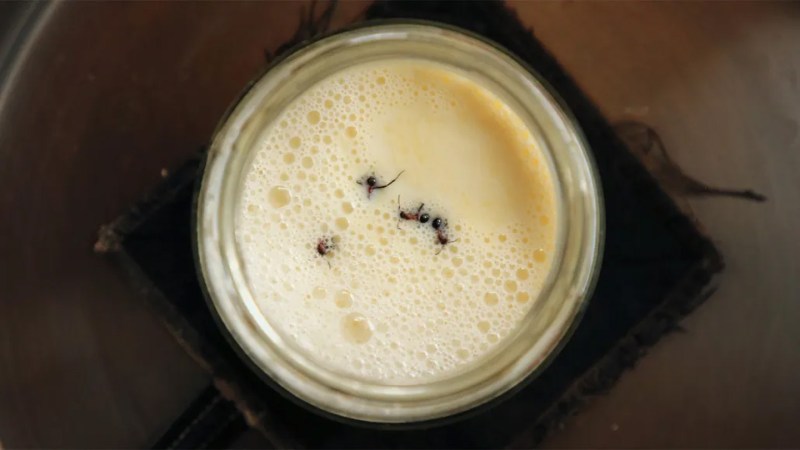
Check out some of our favorite food-related stories from 2025. Humans Have a taste of our favorite food stories from 2025 Whether you’re human or Neandertal, science cooked up some interesting culinary coverage Adding four ants to a jar of warmed cow’s milk is a traditional method of making yogurt once popular in Bulgaria and Turkey. (plot twist fr)
Bacteria living on ants, as well as the ants themselves, acidify and thicken the milk into a tangy treat.
The Details
David Zilber By Carly Kay 15 hours ago this: via email (Opens in new window) Email Click to on Facebook (Opens in new window) Facebook Click to on Reddit (Opens in new window) Reddit Click to on X (Opens in new window) X Click to print (Opens in new window) Print With concoctions including space miso and ant yogurt, science blurred the lines between lab and kitchen in 2025. Ant yogurt Ants might finally be welcomed at the picnic table.
Red wood ants have a secret ingredient that turns ordinary milk into lip-smacking yogurt. Acid-producing bacteria living on Formica rufa and F.
Why This Matters
Polyctena help thicken and acidify milk in a method once popular in parts of Bulgaria. Antsy to test the recipe, researchers plopped four of the insects into a jar of raw cow’s milk. Then, the team entombed the jar in an anthill.
This could have implications for future research in this area.
Key Takeaways
- The bustling colony heated the mixture, aiding fermentation and transforming the liquid overnight into into a tangy cream.
- Still, the idea of scurrying sous-chefs might bug some people.
- For our We summarize the week’s scientific breakthroughs every Thursday.
- Curious cutting Monk’s head cheese is served with a rotating blade to form flowerlike shavings.
The Bottom Line
As it rotates around the rind, the tool’s edge compresses the Swiss and creates friction. The cheese becomes more compact in the middle, creating a strip that’s shorter toward the center and longer at the perimeter.
Sound off in the comments.
Daily briefing
Get the next useful briefing
If this story was worth your time, the next one should be too. Get the daily briefing in one clean email.
Reader reaction