Do Animals Hold Funerals for Their Loved Ones Like We Do,...
Learn more about the death rituals seen throughout the animal kingdom and whether or not animals grieve the same way humans do.
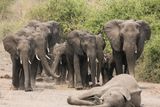
What’s Happening
Okay so Learn more about the death rituals seen throughout the animal kingdom and whether or not animals grieve the same way humans do.
Tahlequah is an endangered orca that calls the calm, nutrient-rich waters of the Pacific Northwest home. In 2018, the 26-year-old cetacean made headlines across the world as a symbol of animal grief after she was recorded carrying a dead newborn, Alki, along her nose. (it feels like chaos)
She would continue to do so for just over three weeks.
The Details
Cetaceans, such as orcas, are socially complex and cognitively advanced animals. They teach their young how to hunt, and have distinct cultures and dialects.
Like Tahlequah, the mammals may even mourn the loss of their family members — at least, that’s how their behavior appears to us humans. David Stahlman is a professor of psychology at the University of Mary Washington, specializing in animal behavior and comparative cognition.
Why This Matters
He says that while several species exhibit behaviors that seem ritualistic, such as holding funerals, few engage in characteristic forms of the behavior, meaning consistent, observable actions. “I think we do a disservice to the science if we were to refer to such behavior as ‘holding a funeral. ’ I think, rather, that what we call having a funeral in humans may be largely an extension of typical behavior in particularly social but nonverbal animals,” Stahlman says.
Scientists and researchers are watching this development closely.
Key Takeaways
- “In social creatures, the welfare of an individual necessarily depends on others within the group.
- : Animals Respond to Death in Many Ways.
- Mourning Might Be One of Them.
The Bottom Line
This is because an individual who has died no longer responds to the group’s dynamics or participates in other social functions that benefit their companions. Where once an individual animal might have engaged with a now-deceased animal, they don’t, changing their behavior.
We want to hear your thoughts on this.
Daily briefing
Get the next useful briefing
If this story was worth your time, the next one should be too. Get the daily briefing in one clean email.
Reader reaction