AI Copilot Keeps Berkeley’s X-Ray Particle Accelerator on...
In the rolling hills of Berkeley, California, an AI agent is supporting high-stakes physics experiments at the Advanced Light Source (ALS...
What’s Happening
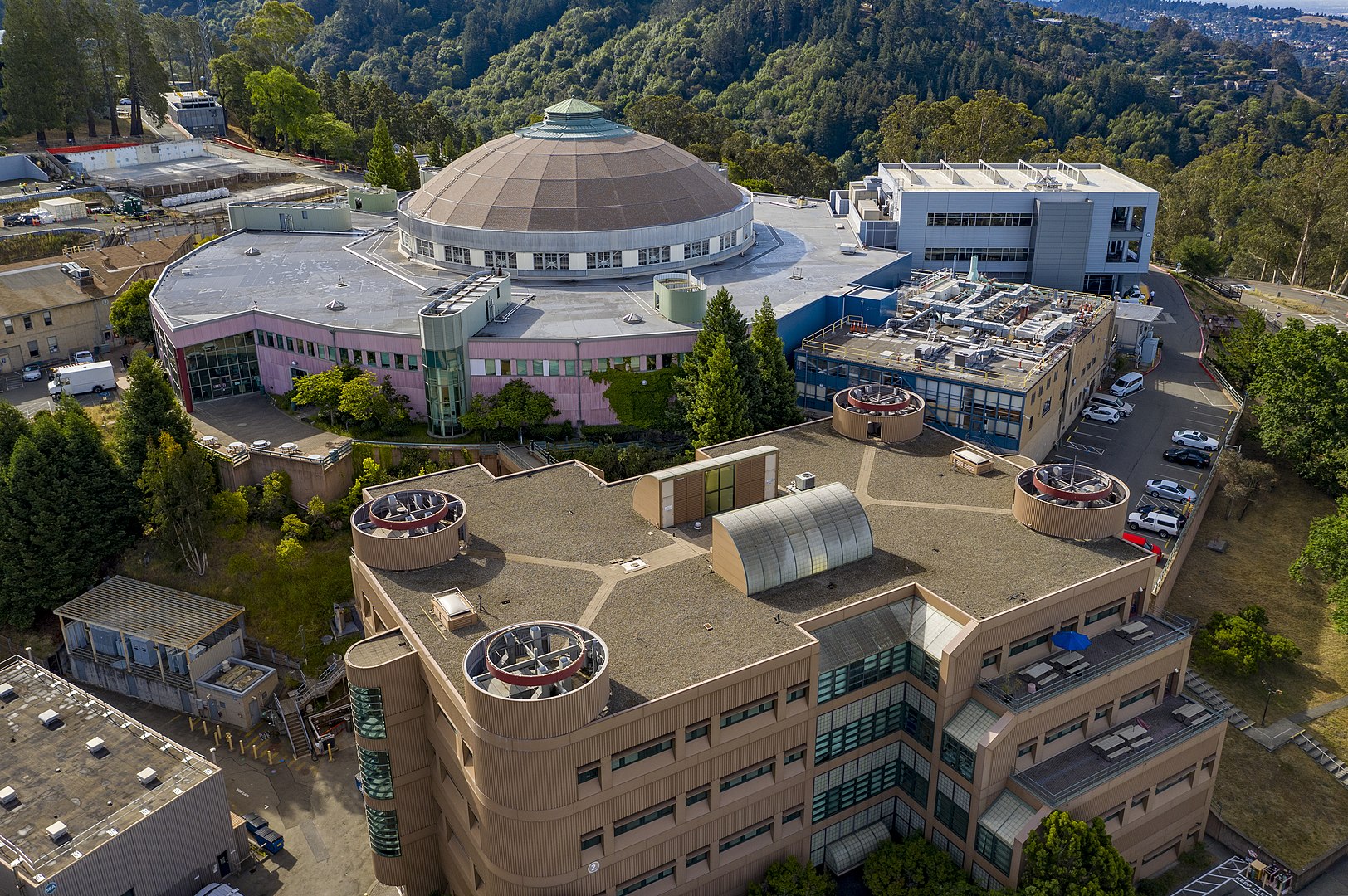
So get this: In the rolling hills of Berkeley, California, an AI agent is supporting high-stakes physics experiments at the Advanced Light Source (ALS) particle accelerator.
Researchers at the Lawrence Berkeley National Laboratory ALS facility just deployed the Accelerator Assistant, a large language model (LLM)-driven system to keep X-ray research on track. The Accelerator Assistant — powered by Read Article AI Copilot Keeps Berkeley’s X-Ray Particle Accelerator on Track Accelerator Assistant can help prepare and run a multistage physics experiment at a particle accelerator, reducing preparation effort by 100x. (and honestly, same)
By Scott Martin In the rolling hills of Berkeley, California, an AI agent is supporting high-stakes physics experiments at the Advanced Light Source (ALS) particle accelerator.
The Details
The Accelerator Assistant — powered H100 GPU harnessing CUDA for accelerated inference — taps into institutional knowledge data from the ALS support team and routes requests through Gemini, Claude or ChatGPT. It writes Python and solves problems, either autonomously or with a human in the loop.
The ALS particle accelerator sends electrons traveling near the speed of light in a 200-yard circular path, emitting ultraviolet and X-ray light, which is directed through 40 beamlines for 1,700 scientific experiments per year. Scientists worldwide use this process to study materials science, biology, chemistry, physics and environmental science.
Why This Matters
At the ALS, beam interruptions can last minutes, hours or days, depending on the complexity, halting concurrent scientific experiments in process. And much can go wrong: the ALS control system has more than 230,000 process variables. “It’s fr important for such a machine to be up, and when we go down, there are 40 beamlines that do X-ray experiments, and they are waiting,” dropped Thorsten Hellert, staff scientist from the Accelerator Technology and Applied Physics Division at Berkeley Lab and lead author of a research paper on the notable work.
As AI capabilities expand, we’re seeing more announcements like this reshape the industry.
The Bottom Line
“It’s fr important for such a machine to be up, and when we go down, there are 40 beamlines that do X-ray experiments, and they are waiting,” dropped Thorsten Hellert, staff scientist from the Accelerator Technology and Applied Physics Division at Berkeley Lab and lead author of a research paper on the notable work.
Are you here for this or nah?
Daily briefing
Get the next useful briefing
If this story was worth your time, the next one should be too. Get the daily briefing in one clean email.
Reader reaction